
After AI, the crisis is no longer governance - it is the figure of the ruler
Важный текст от https://medium.com/@yuliabodnarenko. Все так и на гос.уровне и на корпоративном. Мы еще насладимся этим дивным миром
AI does not replace politics. It exposes how outdated and dangerous the old model of concentrated rule has become.
We still talk about power as if the main problem were bad management: the wrong leaders, the wrong ideology, the wrong decisions. But after AI, the deeper crisis lies elsewhere. It lies in the old political imagination itself - in the belief that a single leader, or a narrow executive core, can still claim to see enough, know enough, and decide enough for everyone else.
Why concentrated rule seemed necessary
We still argue about power as if the main problem were bad management: the wrong leaders, the wrong decisions, the wrong ideology, the wrong speed of response. But with the arrival of strong AI, the frame itself begins to shift. The crisis is no longer only about how power is exercised. It is about why we still imagine complex societies through the figure of a single center of decision: a leader, an inner circle, an executive core that supposedly sees the whole picture better than anyone else and is therefore entitled to decide on behalf of everyone else.
The old figure of the ruler once had a historical justification. The world was too complex, institutions were too slow, and information was too dispersed. The state justified itself by claiming to gather scattered reality into a single direction of action. The ruler, the cabinet, the bureaucratic apparatus - these were not only mechanisms of control, but also mechanisms for concentrating knowledge. Politics, in this sense, was the art of reducing complexity to decision. In presidential systems such as the United States, this is formally balanced by the separation of powers and a system of checks and balances, yet the underlying logic of a central decision-making core never really disappears.
What AI changes
Strong AI undermines this old justification not because it abolishes conflict, morality, fear, ideology, or violence. It does none of those things. What it does is make less convincing the old myth that only a narrow human center can "see the whole" and gather the complexity of the world into a coherent decision. This is already visible at the level of state practice: the Trump administration has pursued a unified national AI policy framework and expanded federal AI adoption, while Vladimir Putin has publicly demanded centralized coordination of domestic generative AI as a matter of technological sovereignty.
But this is also where a new danger appears. Not "the machine in power," but an executive center that has acquired a new nervous system. Financial Times has already described how AI accelerates the American kill chain - the path from data to target to strike. In other words, this is no longer a futuristic hypothesis. The speed, density, and scale of executive action are already changing.
This is why the real question is not whether a given leader "personally uses AI" while sitting at a screen. That is too narrow, too domestic a framing. What matters more is how the very architecture of power changes once the state apparatus begins to rely on computational systems for analysis, coordination, prioritization, and security. In such an environment, power does not merely become faster. It becomes denser.
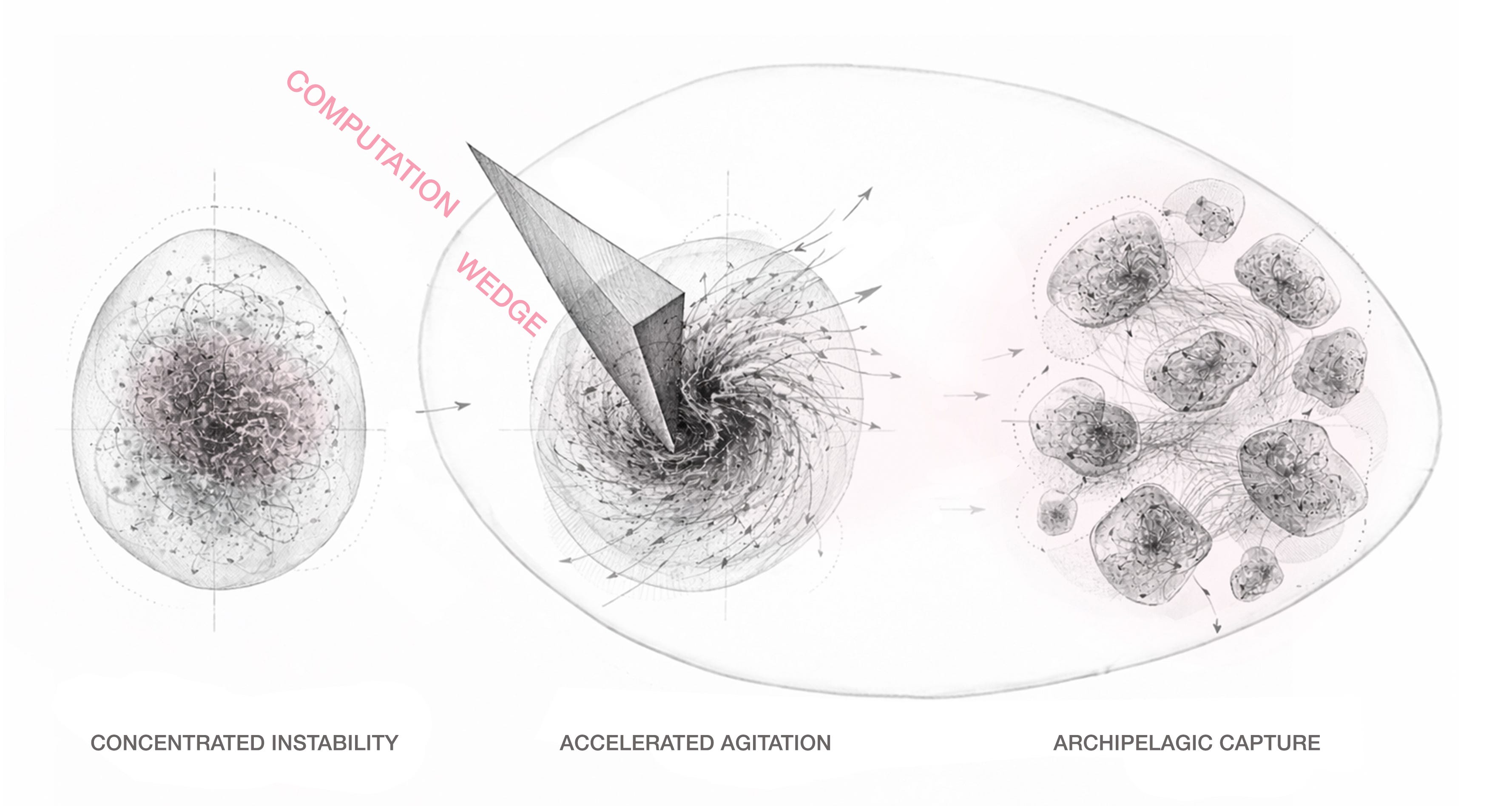
Power becomes denser
This is where the line of Michel Foucault enters almost effortlessly. The modern state has long operated not only through law, command, or direct coercion, but through observation, classification, files, norms, and discipline. AI does not invent this logic from scratch. It scales it up. The file becomes a profile, the profile becomes a pattern, and the pattern becomes a nearly automatic priority for action. Power does not necessarily become louder, but it becomes more deeply embedded in the infrastructure of everyday life. This is no longer just a state that prohibits; it is also a state that continuously sees, ranks, and anticipates.
At the same time, power increasingly ceases to look like power. Here the optic of Pierre Bourdieu becomes crucial: domination often arrives not in the form of command, but in the form of norm, rationality, or "objective necessity." In the age of AI, this becomes especially visible. Not "we decided," but "the model showed." Not "we imposed," but "the system optimized." This is precisely why symbolic violence can become even less visible: coercion easily dresses itself in the language of efficiency, while inequality dresses itself in the language of technical procedure. Technical form creates an illusion of neutrality even where interests, hierarchies, and the power of some to determine the fate of others remain intact.
From here comes the next question, almost in the spirit of Ivan Illich: at what point does a system created to assist begin to take autonomy away from the human being? A state may promise more precise, faster, more responsive governance, while at the same time gradually narrowing the space for doubt, for local knowledge, for the human delay between signal and action. Where there was once room for discussion, there is now a ready-made output; where there was once a basis for disagreement, there is now the feeling that there is no one left to argue with - because what confronts you is not a decision, but a result of computation. This is how efficiency can turn into capture.
Six conceptual lenses
And this is where the old figure of the ruler begins to look especially strange. Ulf Hannerz long ago dismantled the naive image of society as a closed pyramid that could be surveyed from a single summit. The modern world is composed of flows, entanglements, intersecting roles, mediated relations, and transnational circulations. In such a world, the idea of a single cognitive center capable of holding all complexity together appears not only politically dangerous, but conceptually obsolete. Governance begins to look less like sovereign knowledge from above and more like coordination inside a field of conflict and circulation.
This is precisely why the move associated with A. L. Epstein, and more broadly with the Manchester School, is so exact here: power reveals itself best not in solemn declarations, but in situations, disputes, bottlenecks, and fractures. It is not in the rhetoric of innovation that the structure of a regime becomes visible, but in who sets the criteria for a model, who owns the data, who gets to interpret the output, who can contest a conclusion, and who cannot. Conflict is not noise surrounding the system; it is the way the system's real morphology becomes visible.
Yuval Noah Harari adds another important layer: politics is a struggle not only over territory and resources, but over the architecture of information. Who gathers signals? Who binds them into a picture of the world? Who coordinates trust, fear, consent, and loyalty? AI matters here not because it is "smarter than humans," but because it alters the metabolism of the system - the speed of information processing, the rhythm of reaction, the depth of monitoring, and the density of feedback. The central question is no longer whether a machine can think, but what kind of political regime acquires this new informational nervous system.
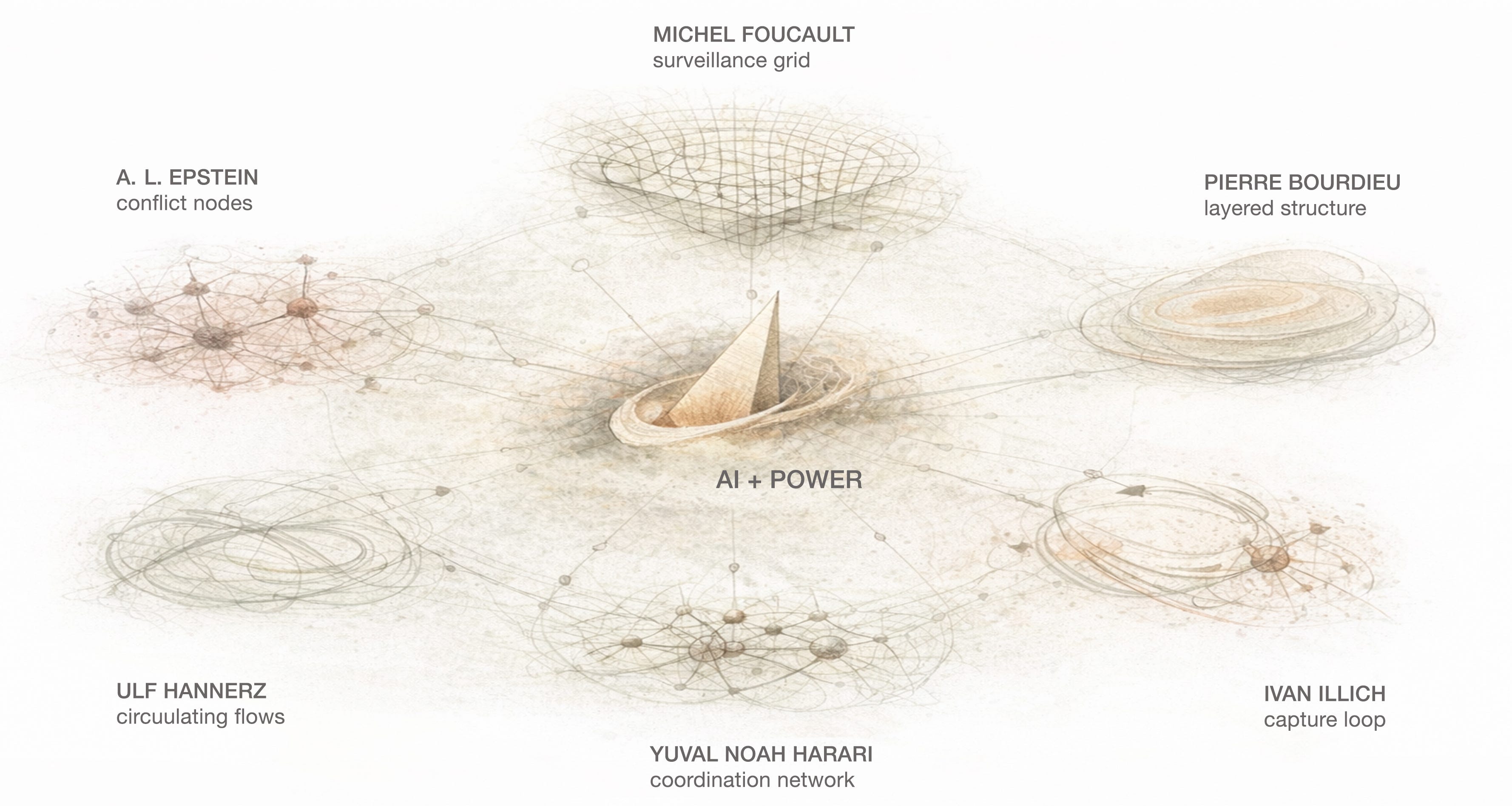
Weak checks, stronger capture
If we look at existing regimes, the differences between them matter, but even more important is the common direction of movement. Freedom House explicitly describes Russia as an authoritarian political system with power concentrated in the hands of Vladimir Putin. In the case of China, Freedom House uses the language of a repressive regime, and describes Xi Jinping as having consolidated personal power to a degree not seen in decades. On Turkey, Freedom House speaks of the increasingly authoritarian rule of Recep Tayyip Erdoğan and the consolidation of control through constitutional change and the repression of opponents. In Hungary, there is a documented pattern of subordinating independent institutions, while V-Dem has long used the language of electoral autocracy. India remains formally a multiparty democracy, but Freedom House classifies it as Partly Free, linking that status to increasing pressure on journalists, NGOs, and critics under Narendra Modi's government. The United States is a different case: not a consolidated autocracy, but one that V-Dem, in its Democracy Report 2025, places within the frame of democratic backsliding and autocratization risks, connecting it to a broader global erosion of democratic norms.
It is precisely in such an environment that AI becomes politically explosive. Not because it is inherently "authoritarian," but because it fits too well into regimes where the executive center already seeks concentration, acceleration, and reduced visibility of its inner mechanisms. Where checks are weak, AI amplifies asymmetry. It helps power see faster, rank faster, react faster, and justify more quickly the direction it has already chosen. In other words, AI does not create personalism, but it can make personalism more technical, more persuasive in appearance, and harder to contest.
What prevents monopoly
This is where the central question of the post-AI age emerges. Not "Will AI replace the politician?" and not "Who is smarter - the leader or the machine?" The question is different: why are we still willing to entrust the fate of complex societies to narrow centers of decision when those very centers, coupled with computational power, are becoming more dangerous?
This is not an argument for abolishing politics, nor is it a fantasy of rule by algorithm. On the contrary. The stronger our analytical tools become, the more important it is to distinguish analysis from sovereign decision. AI can enhance our capacity to grasp complexity, model consequences, identify contradictions, and illuminate risks. But that is precisely why final decision-making must become not less, but more constrained - by law, parliament, courts, the press, independent expertise, the possibility of contestation, transparency of criteria, and human responsibility for consequences. Not because the human is "better than the machine," but because without these layers of review, the human, the institution, and the model too easily begin to function as one and the same closed executive center.
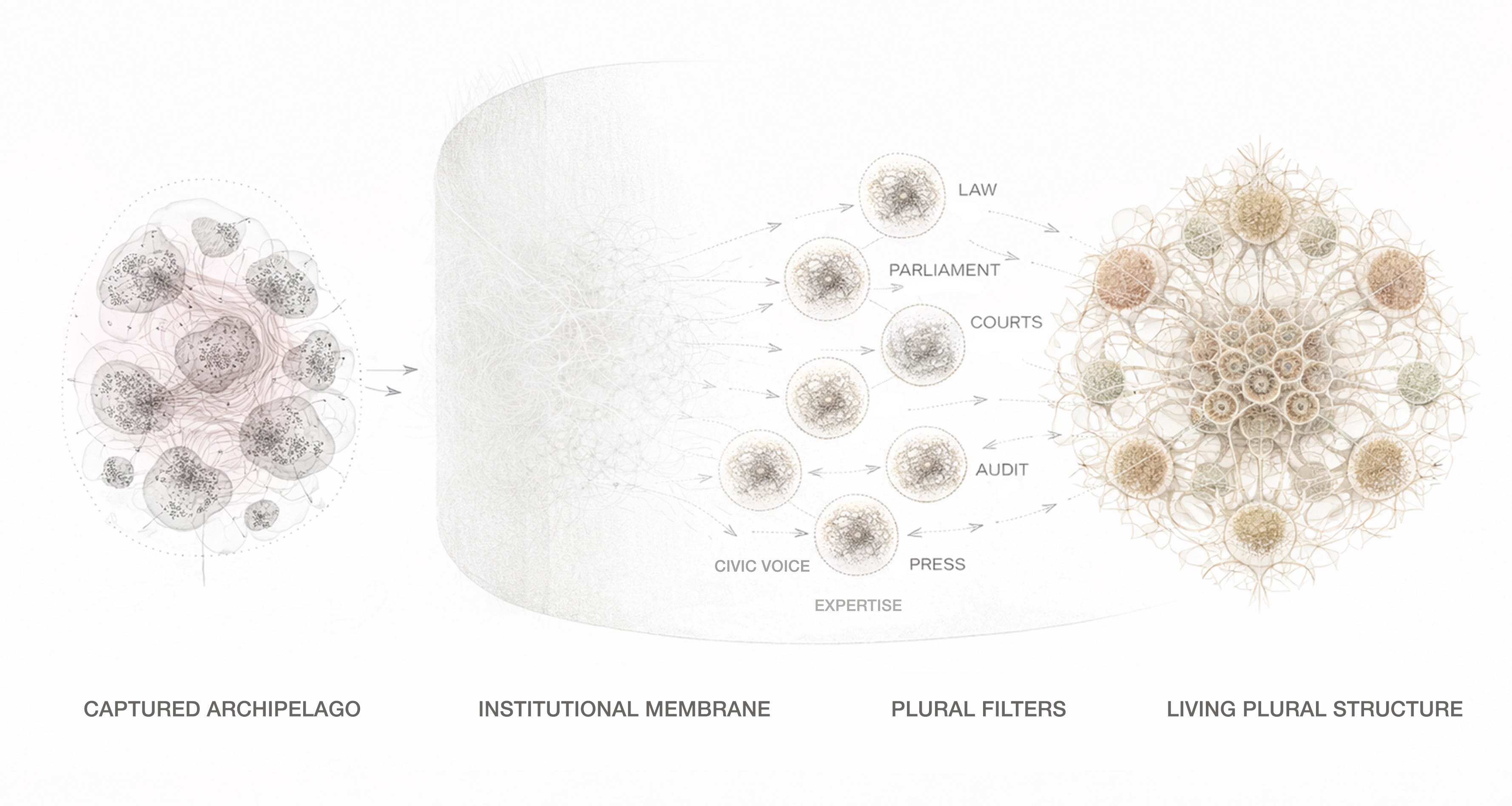
After AI, the problem is the ruler
After AI, the crisis truly turns out to lie not so much in governance as a technique, but in the very figure of the ruler. The old model of power - personal will, charisma, opacity, a narrow cognitive core - loses its former plausibility. But a new form has not yet been born. And that is why the central political struggle of the coming years will likely concern not who should rule, but how to prevent any person, institution, or model from appropriating a monopoly on decision.
Selected references
Financial Times, n.d. AI accelerates the American kill chain. Freedom House, n.d. China. Freedom House, n.d. Hungary. Freedom House, n.d. India. Freedom House, n.d. Russia. Freedom House, n.d. Turkey. Reuters, n.d. Trump administration AI policy and AI governance reporting. V-Dem Institute, 2025. Democracy Report 2025. Gothenburg: V-Dem Institute. White House, 2025. Eliminating State Law Obstruction of National Artificial Intelligence Policy. Washington, DC: The White House.
Theoretical references
Bourdieu, P., 1991. Language and Symbolic Power. Cambridge: Polity Press. Epstein, A. L., 1967. The Craft of Social Anthropology. London: Tavistock. Foucault, M., 1977. Discipline and Punish: The Birth of the Prison. New York: Pantheon Books. Hannerz, U., 1980. Exploring the City: Inquiries Toward an Urban Anthropology. New York: Columbia University Press. Harari, Y. N., 2024. Nexus: A Brief History of Information Networks from the Stone Age to AI. London: Jonathan Cape. Illich, I., 1971. Deschooling Society. New York: Harper & Row.